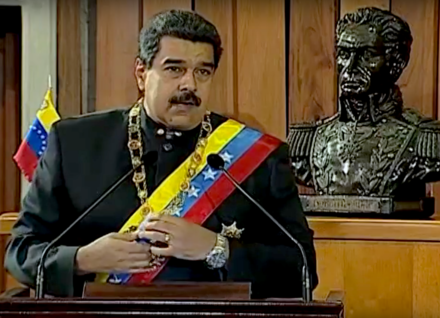
In an unprecedented military operation, U.S. special forces captured Venezuelan President Nicolás Maduro and First Lady Cilia Flores in the early hours of January 3, 2026, marking the first time the United States has physically removed a sitting foreign head of state under allegations of narco-terrorism and drug trafficking.
The Operation: A Coordinated Assault
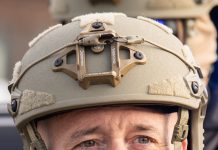
According to multiple consistent reports (AP, CNN, Fox News), the strike began around 2:00 a.m. local time with at least seven explosions reported across Caracas. Low-flying aircraft were observed, and several military facilities were targeted. U.S. Delta Force operators were involved in a rapid extraction of Maduro and Flores, who were taken from a secure military base, placed on a U.S. warship, and flown to New York, where they now face federal charges in the Southern District.
Trump later described the assault as “an operation not seen since World War II” (Variety).
The Legal Case Against Maduro
The indictment, unsealed shortly after the raid, includes charges of narco-terrorism, conspiracy to import cocaine into the U.S., and weapons trafficking (NYT Interactive). The charges were first filed in 2020 but had not been enforced until now. The U.S. had previously labeled Maduro and his inner circle as part of a criminal enterprise—the so-called Cartel de los Soles—which it designated as a foreign terrorist organization in late 2025.
Political Fallout and Trump’s Bold Declaration
President Donald Trump, in a series of press conferences and media statements, announced that the U.S. would “run Venezuela” temporarily to ensure a peaceful transition of power and to “protect the country’s oil resources” (Washington Times, Manila Standard). Trump called on U.S. energy firms to prepare for new investments in Venezuela’s vast petroleum sector.
Reactions: Domestic and Global
The operation triggered sharp criticism and deep concern internationally:
-
Russia condemned the move as “imperialist” and demanded Maduro’s release (Moscow Times).
-
Mexico and Cuba described the action as a grave breach of international law.
-
Spain offered to mediate a peaceful solution (The Local).
U.S. lawmakers were divided. Some Republicans praised the move, comparing Maduro to Al-Qaeda leaders, while several Democrats, including Sen. Ruben Gallego, labeled the strike “illegal” and a violation of international norms (IBTimes).
Venezuelan Response and Leadership Vacuum
In Caracas, Vice President Delcy Rodríguez is expected to assume interim leadership under Venezuelan law, though no formal government communication had confirmed succession by the time of publication. Venezuela declared a state of emergency, and broadcasts aired pro-Maduro messages (Latimes, Khaama Press).
Context: Years in the Making
This operation follows years of rising tensions:
-
A military buildup in the Caribbean.
-
Sanctions on Venezuelan oil exports and Maduro’s inner circle.
-
Failed diplomatic overtures and secret communications between Trump and Maduro throughout late 2025.
What Comes Next
The Trump administration has offered no clear roadmap for Venezuela’s future governance beyond the promise of a “safe and judicious transition.” Analysts warn that the absence of a succession plan, the fragile state of Venezuelan civil institutions, and international backlash could destabilize the region further.
As of this writing, Maduro and Flores remain in U.S. custody in New York. Their arraignment is expected within days.