In a striking shift in North Korean politics and statecraft, Kim Ju-ae, the daughter of Kim Jong-un, has made a series of high-profile public appearances that strongly suggest she is being positioned as his eventual successor. This dynastic signaling comes against the backdrop of intensified military developments, deepening Russia-North Korea ties, and renewed diplomatic maneuvering involving the U.S. and Japan.
As 2026 begins, North Korea is signaling two parallel ambitions with increasing clarity: military escalation and dynastic continuity. In a series of choreographed public appearances and state media coverage, Kim Ju Ae—the daughter of North Korean leader Kim Jong Un—has stepped into the national spotlight. Her emergence, paired with a surge in defense activities and diplomatic overtures to Russia, suggests Pyongyang is carefully preparing for the future.
From the perspective of an intelligence analyst, this pattern is not accidental. It represents a calculated campaign to secure internal legitimacy and external deterrence. The North Korean regime, deeply aware of its vulnerabilities, is investing in both symbolic leadership succession and real-world military capabilities to bolster regime survival.
A Daughter Ascends
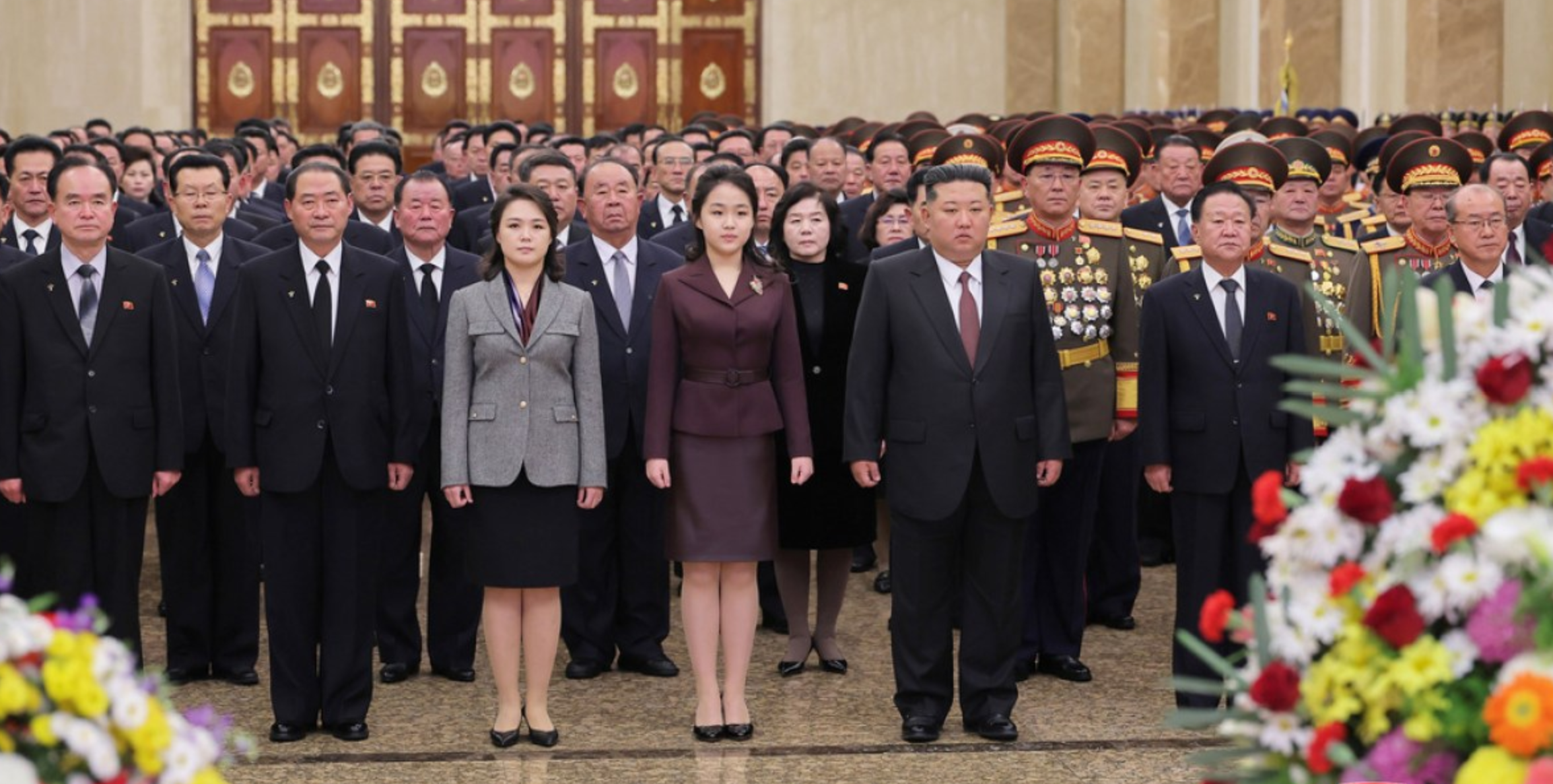
On January 1, Kim Ju Ae made her first known public visit to the Kumsusan Palace of the Sun, a mausoleum that houses the embalmed bodies of her grandfather, Kim Jong Il, and great-grandfather, Kim Il Sung. This act is not merely ceremonial. In North Korean political culture, access to the mausoleum is reserved for the highest echelons of power. Her appearance at this site, broadcast widely through state and international media, is a strong indicator she is being positioned as her father’s successor.
Over the past year, Ju Ae has made increasingly frequent public appearances, often at her father’s side during military events, parades, and public ceremonies. Her presence has been symbolic and strategic. In a state where leadership is legitimized through bloodline, these appearances serve as both a domestic signal to party elites and a message to the outside world: the Kim dynasty intends to endure.
Parallel Messages: Missiles and Mausoleums
While the images of Ju Ae walking solemnly beside her father captured attention, they were accompanied by a flurry of more traditional demonstrations of North Korean power.
In December alone, North Korea:
- Unveiled a nuclear-powered submarine,
- Test-fired new cruise missiles reportedly capable of carrying nuclear warheads,
- Ordered increased missile production,
- Showcased new hypersonic and intercontinental ballistic missiles,
- Hailed the role of the military in a partnership with Russia.
Taken together, these activities suggest that North Korea’s leadership is executing a deliberate strategy: to elevate Ju Ae as a figure of national unity and continuity, while simultaneously projecting strength through military modernization.
Russia: A Strategic Embrace
Another key trend that intelligence professionals have been closely monitoring is North Korea’s increasingly overt alignment with Russia. Throughout late 2025, Kim Jong Un made repeated references to the “invincible friendship” between Pyongyang and Moscow. These statements were reinforced by more concrete developments.
North Korean troops reportedly returned from missions in Russia, including mine-clearing operations in Ukraine. State media honored these troops in ceremonies attended by Kim himself. The language used—speaking of “shared blood, life and death”—was unambiguous. North Korea is moving beyond rhetorical support for Russia’s war in Ukraine and edging into a more substantive military partnership.
This pivot is strategic. Isolated by international sanctions and lacking powerful allies beyond China, Pyongyang sees Moscow as a partner in anti-Western defiance. In return, Russia benefits from low-cost manpower, diplomatic support, and potentially access to munitions.
What It Means
From a strategic analysis perspective, the dual track of military buildup and dynastic succession is meant to ensure regime longevity on multiple fronts.
- Internal Stability: By elevating Ju Ae, Kim Jong Un is reinforcing the Kim family legacy, which has been central to state ideology for decades. Her prominence provides a continuity narrative in case of illness, crisis, or eventual transition.
- External Deterrence: The show of advanced weapons systems, including hypersonic missiles and nuclear submarines, is intended to deter intervention and raise the stakes of any potential conflict.
- Geopolitical Leverage: Strengthening ties with Russia offers North Korea a hedge against total dependency on China. It also provides leverage in any future negotiations with the U.S. or South Korea.
Risks and Implications
For the international community, these developments present complex risks. The symbolic rise of Ju Ae could embolden North Korea’s leadership to act more aggressively in the near term, believing that the appearance of continuity offers greater insulation from internal dissent.
Moreover, the deepening military relationship with Russia could represent a new axis of global instability. With Ukraine as a backdrop, North Korea’s participation in Russia’s war effort, even peripherally, places it in open opposition to much of the West.
While some analysts speculate that Pyongyang may eventually leverage Ju Ae’s image for diplomatic soft power—possibly portraying her as a future reformer—the current signals point firmly toward increased militarization and authoritarian consolidation.
Conclusion
North Korea’s messaging is layered but deliberate. Through tightly choreographed ceremonies, weapons displays, and diplomatic overtures, it is signaling a new chapter: one where dynastic succession and military strength are fused. As Kim Jong Un promotes his daughter and expands his arsenal, the world should take note. The regime is not only planning for 2026. It is preparing for decades to come.